Buy vapewild.eu ?
We are moving the project
vapewild.eu .
Are you interested in purchasing the domain
vapewild.eu ?
domain@kv-gmbh.de · 0541-91531010
Buy vapewild.eu ?
What is the difference between standard enthalpy of formation, enthalpy of formation, and reaction enthalpy?
The standard enthalpy of formation is the enthalpy change that occurs when one mole of a compound is formed from its elements in their standard states. Enthalpy of formation is the enthalpy change that occurs when one mole of a compound is formed from its elements in their standard states, but it can be under non-standard conditions. Reaction enthalpy is the enthalpy change that occurs in a chemical reaction, which can be exothermic (heat is released) or endothermic (heat is absorbed). **
What is enthalpy?
Enthalpy is a thermodynamic property of a system that represents the total energy of the system, including its internal energy and the energy required to maintain constant pressure. It is often denoted as H and is expressed in units of joules. Enthalpy is important in understanding and analyzing processes such as chemical reactions and phase changes, as it provides a measure of the heat content of a system. In practical terms, enthalpy change is often used to quantify the heat absorbed or released during a process at constant pressure. **


Similar search terms for Enthalpy
Top-Angebote
Products related to Enthalpy:
-
Inspire Essentials Adjustable Ultra Quiet Aquarium Air Pump Oxygen System For Fish Tanks eGive your fish a healthier and more comfortable environment with this Aquarium Air Pump. Designed to deliver a steady flow of oxygen, it helps improve water circulation while supporting a balanced aquatic ecosystem. The ultra quiet operation keeps...118,98 $*Shipping: 0,00 $Secure redirect to the provider
-
United Premium Stainless Steel Funnel For Kitchen Oil, Wine, And Liquids Premium Stainless Steel Funnel For Kitchen Oil, Wine, And LiquidsMake every pour precise and messfree with our stainless steel funnel. Designed for home chefs and beverage enthusiasts alike, this small yet durable tool ensures no spills when transferring oil, wine, or other liquids. Crafted for convenience, its...49,97 $*Shipping: 0,00 $Secure redirect to the provider
-
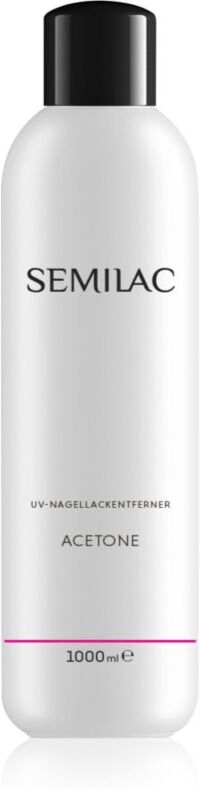
Semilac Liquids pure acetone for removing gel nails 1000 mlSemilac Liquids, 1000 ml, Nail Varnish Removers for Women, Nails with chipped nail polish never look pretty, let alone neat. Step in before the peeling starts. The Semilac Liquids nail polish remover helps you remove any nail polish from the surface of your nails quickly and effectively. It leaves them perfectly clean, free of any residue and ready for the next step. This allows you to change up your style as often as you please – you’ll be ready for a brand new at-home manicure in no time. Characteristics: also removes dirt and oily traces from the nails removes polish quickly and effectively How to use: Apply the nail polish remover to a cotton wool pad, place briefly on the nails, then remove the polish gently.9,70 £*Shipping: 3,99 £Secure redirect to the provider
-
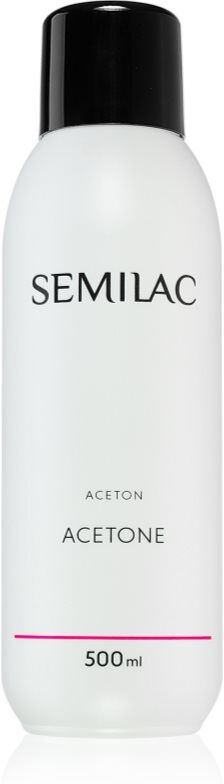
Semilac Liquids pure acetone for removing gel nails 500 mlSemilac Liquids, 500 ml, Nail Varnish Removers for Women, Nails with chipped nail polish never look pretty, let alone neat. Step in before the peeling starts. The Semilac Liquids nail polish remover helps you remove any nail polish from the surface of your nails quickly and effectively. It leaves them perfectly clean, free of any residue and ready for the next step. This allows you to change up your style as often as you please – you’ll be ready for a brand new at-home manicure in no time. Characteristics: also removes dirt and oily traces from the nails removes polish quickly and effectively How to use: Apply the nail polish remover to a cotton wool pad, place briefly on the nails, then remove the polish gently.6,50 £*Shipping: 3,99 £Secure redirect to the provider


-
What is the difference between bond enthalpy and formation enthalpy?
Bond enthalpy is the energy required to break a specific chemical bond in a molecule, while formation enthalpy is the energy change when one mole of a compound is formed from its elements in their standard states. Bond enthalpy is specific to a particular bond within a molecule, while formation enthalpy is a measure of the overall energy change in forming a compound. Bond enthalpy is typically measured in kilojoules per mole (kJ/mol), while formation enthalpy is also measured in kilojoules per mole (kJ/mol). **
-
What is Hess's law for standard formation enthalpy and combustion enthalpy?
Hess's law states that the total enthalpy change for a reaction is the same regardless of the number of steps taken to reach the final products. This principle can be applied to standard formation enthalpies and combustion enthalpies by using a series of known enthalpy changes to calculate the overall enthalpy change for a reaction. By manipulating and combining these known enthalpies, Hess's law allows us to determine the enthalpy change for reactions that may not be easily measured directly. **
-
What is the difference between standard formation enthalpy and enthalpy change?
Standard formation enthalpy is the enthalpy change that occurs when one mole of a compound is formed from its elements in their standard states. It is a specific type of enthalpy change that is measured under standard conditions. Enthalpy change, on the other hand, is a more general term that refers to the overall change in enthalpy of a system during a chemical reaction or process, regardless of whether it involves formation of a compound or not. Enthalpy change can be positive (endothermic) or negative (exothermic), depending on whether energy is absorbed or released during the process. **
-
How to calculate the reaction enthalpy from the molar bond enthalpy?
To calculate the reaction enthalpy from the molar bond enthalpy, you need to consider the difference between the sum of the bond enthalpies of the reactants and the sum of the bond enthalpies of the products. First, calculate the total bond enthalpy of all the bonds broken in the reactants, and then calculate the total bond enthalpy of all the bonds formed in the products. The reaction enthalpy is then the difference between these two values, with the bond enthalpies of the products subtracted from the bond enthalpies of the reactants. This calculation allows you to determine whether a reaction is exothermic (releasing heat) or endothermic (absorbing heat). **


What is the difference between standard enthalpy of formation and enthalpy change?
The standard enthalpy of formation is the enthalpy change that occurs when one mole of a compound is formed from its elements in their standard states. It is a specific type of enthalpy change that is measured under standard conditions. On the other hand, enthalpy change refers to the overall change in enthalpy of a system during a chemical reaction or process, which can include various types of enthalpy changes such as enthalpy of reaction, enthalpy of combustion, or enthalpy of solution. In summary, standard enthalpy of formation is a specific type of enthalpy change that relates to the formation of a compound from its elements, while enthalpy change is a broader term that encompasses various types of enthalpy changes in a system. **
What is Hess's law equation for standard formation enthalpy and combustion enthalpy?
Hess's law states that the overall enthalpy change for a reaction is the same regardless of the number of steps taken to reach the final products. For standard formation enthalpy, the equation is: ∆Hf°(products) = ∑∆Hf°(products) - ∑∆Hf°(reactants). For combustion enthalpy, the equation is: ∆Hcomb° = ∑∆Hf°(products) - ∑∆Hf°(reactants). These equations allow us to calculate the enthalpy change of a reaction using the enthalpies of formation of the reactants and products. **
Top-Angebote
Products related to Enthalpy:
-
Inspire Essentials Adjustable Ultra Quiet Aquarium Air Pump Oxygen System For Fish Tanks eGive your fish a healthier and more comfortable environment with this Aquarium Air Pump. Designed to deliver a steady flow of oxygen, it helps improve water circulation while supporting a balanced aquatic ecosystem. The ultra quiet operation keeps...118,98 $*Shipping: 0,00 $Secure redirect to the provider
-
United Premium Stainless Steel Funnel For Kitchen Oil, Wine, And Liquids Premium Stainless Steel Funnel For Kitchen Oil, Wine, And LiquidsMake every pour precise and messfree with our stainless steel funnel. Designed for home chefs and beverage enthusiasts alike, this small yet durable tool ensures no spills when transferring oil, wine, or other liquids. Crafted for convenience, its...49,97 $*Shipping: 0,00 $Secure redirect to the provider
-
What is the difference between standard enthalpy of formation, enthalpy of formation, and reaction enthalpy?
The standard enthalpy of formation is the enthalpy change that occurs when one mole of a compound is formed from its elements in their standard states. Enthalpy of formation is the enthalpy change that occurs when one mole of a compound is formed from its elements in their standard states, but it can be under non-standard conditions. Reaction enthalpy is the enthalpy change that occurs in a chemical reaction, which can be exothermic (heat is released) or endothermic (heat is absorbed). **
-
What is enthalpy?
Enthalpy is a thermodynamic property of a system that represents the total energy of the system, including its internal energy and the energy required to maintain constant pressure. It is often denoted as H and is expressed in units of joules. Enthalpy is important in understanding and analyzing processes such as chemical reactions and phase changes, as it provides a measure of the heat content of a system. In practical terms, enthalpy change is often used to quantify the heat absorbed or released during a process at constant pressure. **
-
What is the difference between bond enthalpy and formation enthalpy?
Bond enthalpy is the energy required to break a specific chemical bond in a molecule, while formation enthalpy is the energy change when one mole of a compound is formed from its elements in their standard states. Bond enthalpy is specific to a particular bond within a molecule, while formation enthalpy is a measure of the overall energy change in forming a compound. Bond enthalpy is typically measured in kilojoules per mole (kJ/mol), while formation enthalpy is also measured in kilojoules per mole (kJ/mol). **
-
What is Hess's law for standard formation enthalpy and combustion enthalpy?
Hess's law states that the total enthalpy change for a reaction is the same regardless of the number of steps taken to reach the final products. This principle can be applied to standard formation enthalpies and combustion enthalpies by using a series of known enthalpy changes to calculate the overall enthalpy change for a reaction. By manipulating and combining these known enthalpies, Hess's law allows us to determine the enthalpy change for reactions that may not be easily measured directly. **
Similar search terms for Enthalpy
-
Semilac Liquids pure acetone for removing gel nails 1000 mlSemilac Liquids, 1000 ml, Nail Varnish Removers for Women, Nails with chipped nail polish never look pretty, let alone neat. Step in before the peeling starts. The Semilac Liquids nail polish remover helps you remove any nail polish from the surface of your nails quickly and effectively. It leaves them perfectly clean, free of any residue and ready for the next step. This allows you to change up your style as often as you please – you’ll be ready for a brand new at-home manicure in no time. Characteristics: also removes dirt and oily traces from the nails removes polish quickly and effectively How to use: Apply the nail polish remover to a cotton wool pad, place briefly on the nails, then remove the polish gently.9,70 £*Shipping: 3,99 £Secure redirect to the provider
-
Semilac Liquids pure acetone for removing gel nails 500 mlSemilac Liquids, 500 ml, Nail Varnish Removers for Women, Nails with chipped nail polish never look pretty, let alone neat. Step in before the peeling starts. The Semilac Liquids nail polish remover helps you remove any nail polish from the surface of your nails quickly and effectively. It leaves them perfectly clean, free of any residue and ready for the next step. This allows you to change up your style as often as you please – you’ll be ready for a brand new at-home manicure in no time. Characteristics: also removes dirt and oily traces from the nails removes polish quickly and effectively How to use: Apply the nail polish remover to a cotton wool pad, place briefly on the nails, then remove the polish gently.6,50 £*Shipping: 3,99 £Secure redirect to the provider
-
Semilac Liquids pure acetone for removing gel nails 125 mlSemilac Liquids, 125 ml, Nail Varnish Removers for Women, Nails with chipped nail polish never look pretty, let alone neat. Step in before the peeling starts. The Semilac Liquids nail polish remover helps you remove any nail polish from the surface of your nails quickly and effectively. It leaves them perfectly clean, free of any residue and ready for the next step. This allows you to change up your style as often as you please – you’ll be ready for a brand new at-home manicure in no time. Characteristics: also removes dirt and oily traces from the nails removes polish quickly and effectively How to use: Apply the nail polish remover to a cotton wool pad, place briefly on the nails, then remove the polish gently.4,60 £*Shipping: 3,99 £Secure redirect to the provider
-
Semilac Liquids pure acetone for removing gel nails 50 mlSemilac Liquids, 50 ml, Nail Varnish Removers for Women, Nails with chipped nail polish never look pretty, let alone neat. Step in before the peeling starts. The Semilac Liquids nail polish remover helps you remove any nail polish from the surface of your nails quickly and effectively. It leaves them perfectly clean, free of any residue and ready for the next step. This allows you to change up your style as often as you please – you’ll be ready for a brand new at-home manicure in no time. Characteristics: also removes dirt and oily traces from the nails removes polish quickly and effectively How to use: Apply the nail polish remover to a cotton wool pad, place briefly on the nails, then remove the polish gently.2,90 £*Shipping: 3,99 £Secure redirect to the provider
-
What is the difference between standard formation enthalpy and enthalpy change?
Standard formation enthalpy is the enthalpy change that occurs when one mole of a compound is formed from its elements in their standard states. It is a specific type of enthalpy change that is measured under standard conditions. Enthalpy change, on the other hand, is a more general term that refers to the overall change in enthalpy of a system during a chemical reaction or process, regardless of whether it involves formation of a compound or not. Enthalpy change can be positive (endothermic) or negative (exothermic), depending on whether energy is absorbed or released during the process. **
-
How to calculate the reaction enthalpy from the molar bond enthalpy?
To calculate the reaction enthalpy from the molar bond enthalpy, you need to consider the difference between the sum of the bond enthalpies of the reactants and the sum of the bond enthalpies of the products. First, calculate the total bond enthalpy of all the bonds broken in the reactants, and then calculate the total bond enthalpy of all the bonds formed in the products. The reaction enthalpy is then the difference between these two values, with the bond enthalpies of the products subtracted from the bond enthalpies of the reactants. This calculation allows you to determine whether a reaction is exothermic (releasing heat) or endothermic (absorbing heat). **
-
What is the difference between standard enthalpy of formation and enthalpy change?
The standard enthalpy of formation is the enthalpy change that occurs when one mole of a compound is formed from its elements in their standard states. It is a specific type of enthalpy change that is measured under standard conditions. On the other hand, enthalpy change refers to the overall change in enthalpy of a system during a chemical reaction or process, which can include various types of enthalpy changes such as enthalpy of reaction, enthalpy of combustion, or enthalpy of solution. In summary, standard enthalpy of formation is a specific type of enthalpy change that relates to the formation of a compound from its elements, while enthalpy change is a broader term that encompasses various types of enthalpy changes in a system. **
-
What is Hess's law equation for standard formation enthalpy and combustion enthalpy?
Hess's law states that the overall enthalpy change for a reaction is the same regardless of the number of steps taken to reach the final products. For standard formation enthalpy, the equation is: ∆Hf°(products) = ∑∆Hf°(products) - ∑∆Hf°(reactants). For combustion enthalpy, the equation is: ∆Hcomb° = ∑∆Hf°(products) - ∑∆Hf°(reactants). These equations allow us to calculate the enthalpy change of a reaction using the enthalpies of formation of the reactants and products. **
* All prices are inclusive of VAT and, if applicable, plus shipping costs. The offer information is based on the details provided by the respective shop and is updated through automated processes. Real-time updates do not occur, so deviations can occur in individual cases. ** Note: Parts of this content were created by AI.