Buy vapewild.eu ?
We are moving the project
vapewild.eu .
Are you interested in purchasing the domain
vapewild.eu ?
domain@kv-gmbh.de · 0541-91531010
Buy vapewild.eu ?
How do you calculate the braking distance, the braking process, and the braking deceleration?
The braking distance can be calculated using the formula: braking distance = (initial velocity^2) / (2 * deceleration), where the deceleration is the rate at which the vehicle slows down. The braking process involves the driver applying the brakes, which causes friction between the brake pads and the wheels, leading to a decrease in the vehicle's speed. The braking deceleration can be calculated by dividing the change in velocity by the time it takes for the vehicle to come to a complete stop. **
How do you calculate the braking time and braking distance?
Braking time and braking distance can be calculated using the formula: Braking distance = (initial velocity^2) / (2 * deceleration) Where initial velocity is the speed of the vehicle before braking, and deceleration is the rate at which the vehicle slows down. Braking time can be calculated by dividing the braking distance by the initial velocity. These calculations are based on the assumption of constant deceleration, and may vary depending on factors such as road conditions and the vehicle's braking system. **


Similar search terms for Braking
Top-Angebote
Products related to Braking:
-
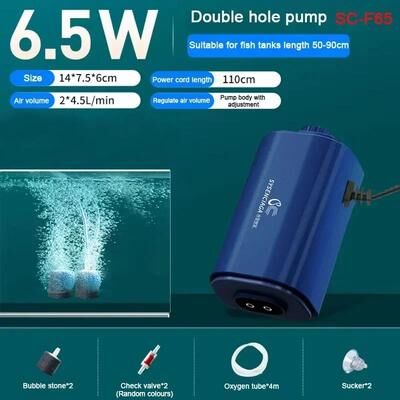
Inspire Essentials Adjustable Ultra Quiet Aquarium Air Pump Oxygen System For Fish Tanks eGive your fish a healthier and more comfortable environment with this Aquarium Air Pump. Designed to deliver a steady flow of oxygen, it helps improve water circulation while supporting a balanced aquatic ecosystem. The ultra quiet operation keeps...118,98 $*Shipping: 0,00 $Secure redirect to the provider
-
Chapman ML-1 Hot Rod Natural 2014 Electric Guitar w/ Mods natural - RefurbishedThis is a Chapman ML-1 Hot Rod Electric Guitar in Natural Satin finish. Made in Korea in 2014, this guitar consists of a Swamp Ash body, a Maple neck, and a 22-fret Ebony fingerboard. Other appointments include an upgraded Schaller 2-Point Tremolo bridge, Black Grover tuners, a Wide Graphtec Nut, a Seymour Duncan TB4 JB Trembucker in the bridge position, and two IronGear Texas Loco Single Coils in the neck and middle positions. These pickups are wired to a master volume (push/pull coil split), a master tone, and a 5-way pickup selector. The Maple neck sits comfortably in the hand, with the 'C' profile allowing for easy fretting in any register and providing ergonomic thumb positioning up and down the neck. The Satin finish to the rear of the neck assists with smooth and speedy navigation of the 25.5" scale length. The Ebony fingerboard is pleasant to the touch, and with its 13.78” radius makes bending and vibrato techniques a breeze. Certainly, the fingerboard offers a nice balance between comfortable chord playing and practicality for quick lead lines. The Jumbo frets enhance vibrato techniques at speed whilst also providing a rock-solid and smooth playing experience. The Seymour Duncan TB4 JB Trembucker has a balanced output, producing a thick and powerful modern tone whilst offering a tight bottom end, and a searing high frequency cut, making a great pickup for heavy styles of music and modern techniques. The IronGear Texas Loco Single Coil neck pickup provides crystal clear clean sounds, with more aggressive mids and increased sustain as you crank the gain. This is perfect for high-speed solos and melodic interludes. The IronGear Texas Loco Single Coil in the middle position sits great with a nice balance of bright trebles and full warm bass, and lends itself well to rhythm tones. Providing a great feel and clarity, allowing the player to achieve a wide variety of tones all at the fingertips.480,00 £*Shipping: 0,00 £Secure redirect to the provider
-
United Premium Stainless Steel Funnel For Kitchen Oil, Wine, And Liquids Premium Stainless Steel Funnel For Kitchen Oil, Wine, And LiquidsMake every pour precise and messfree with our stainless steel funnel. Designed for home chefs and beverage enthusiasts alike, this small yet durable tool ensures no spills when transferring oil, wine, or other liquids. Crafted for convenience, its...49,97 $*Shipping: 0,00 $Secure redirect to the provider
-
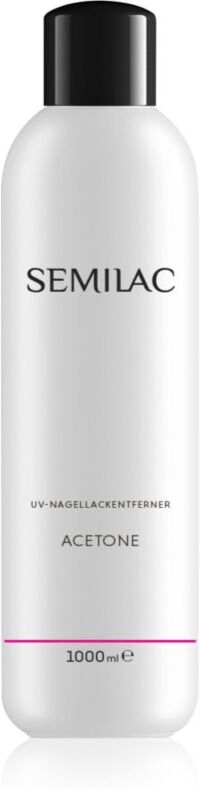
Semilac Liquids pure acetone for removing gel nails 1000 mlSemilac Liquids, 1000 ml, Nail Varnish Removers for Women, Nails with chipped nail polish never look pretty, let alone neat. Step in before the peeling starts. The Semilac Liquids nail polish remover helps you remove any nail polish from the surface of your nails quickly and effectively. It leaves them perfectly clean, free of any residue and ready for the next step. This allows you to change up your style as often as you please – you’ll be ready for a brand new at-home manicure in no time. Characteristics: also removes dirt and oily traces from the nails removes polish quickly and effectively How to use: Apply the nail polish remover to a cotton wool pad, place briefly on the nails, then remove the polish gently.9,70 £*Shipping: 3,99 £Secure redirect to the provider


-
What are the differences between braking to walking speed and braking?
Braking to walking speed typically involves gradually reducing speed until coming to a complete stop, whereas braking refers to the act of slowing down a moving vehicle. When braking to walking speed, the goal is to smoothly decelerate without any sudden stops, while braking may involve more forceful actions to slow down quickly. Additionally, braking to walking speed is often used in situations where a vehicle needs to stop at a precise location, such as at a crosswalk or intersection. **
-
How do you calculate braking time and braking distance in physics?
In physics, braking time and braking distance can be calculated using the equations of motion and the principles of kinematics. The braking time can be calculated using the equation t = v/u, where t is the braking time, v is the final velocity, and u is the initial velocity. The braking distance can be calculated using the equation d = (v^2 - u^2) / (2a), where d is the braking distance and a is the deceleration. These equations take into account the initial and final velocities, as well as the deceleration of the object to determine the braking time and distance. **
-
Is braking a reflex?
Braking can be considered a reflex in certain situations. When a driver reacts to a sudden obstacle or hazard on the road by immediately pressing the brake pedal, it can be seen as a reflexive action. This is because the response is automatic and occurs without conscious thought. However, braking can also be a learned behavior, as drivers are trained to use their brakes in specific situations through practice and experience. Therefore, while braking can be a reflex in some cases, it can also be a learned and intentional action. **
-
What is the formula for braking acceleration and braking time in physics?
The formula for braking acceleration is given by \( a = \frac{v_f - v_i}{t} \), where \( a \) is the braking acceleration, \( v_f \) is the final velocity, \( v_i \) is the initial velocity, and \( t \) is the time taken to come to a stop. The formula for braking time can be calculated using the equation \( t = \frac{v_f - v_i}{a} \), where \( t \) is the braking time. These formulas are used to calculate the rate at which an object slows down when braking. **

What is the difference between a full braking and an emergency braking?
Full braking refers to applying the brakes with maximum force in a controlled manner to slow down or stop the vehicle. This can be done in response to normal traffic conditions or when approaching a stop sign or traffic light. On the other hand, emergency braking is a sudden and forceful application of the brakes in response to an unexpected hazard or danger, such as a pedestrian stepping into the road or a vehicle suddenly stopping in front. Emergency braking is typically done to avoid a collision and requires quick reflexes and a strong, immediate response from the driver. **
What is the difference between braking with a clutch and braking without?
Braking with a clutch involves pressing the clutch pedal while simultaneously applying the brakes, which disengages the engine from the transmission and allows the vehicle to coast to a stop. This method is often used in manual transmission vehicles to prevent stalling. On the other hand, braking without using the clutch means simply applying the brakes without disengaging the engine from the transmission, which can cause the vehicle to stall if the engine speed drops too low. In summary, the main difference is that braking with a clutch allows the vehicle to coast to a stop without stalling, while braking without the clutch can potentially lead to stalling if not done properly. **
Top-Angebote
Products related to Braking:
-
Inspire Essentials Adjustable Ultra Quiet Aquarium Air Pump Oxygen System For Fish Tanks eGive your fish a healthier and more comfortable environment with this Aquarium Air Pump. Designed to deliver a steady flow of oxygen, it helps improve water circulation while supporting a balanced aquatic ecosystem. The ultra quiet operation keeps...118,98 $*Shipping: 0,00 $Secure redirect to the provider
-
Chapman ML-1 Hot Rod Natural 2014 Electric Guitar w/ Mods natural - RefurbishedThis is a Chapman ML-1 Hot Rod Electric Guitar in Natural Satin finish. Made in Korea in 2014, this guitar consists of a Swamp Ash body, a Maple neck, and a 22-fret Ebony fingerboard. Other appointments include an upgraded Schaller 2-Point Tremolo bridge, Black Grover tuners, a Wide Graphtec Nut, a Seymour Duncan TB4 JB Trembucker in the bridge position, and two IronGear Texas Loco Single Coils in the neck and middle positions. These pickups are wired to a master volume (push/pull coil split), a master tone, and a 5-way pickup selector. The Maple neck sits comfortably in the hand, with the 'C' profile allowing for easy fretting in any register and providing ergonomic thumb positioning up and down the neck. The Satin finish to the rear of the neck assists with smooth and speedy navigation of the 25.5" scale length. The Ebony fingerboard is pleasant to the touch, and with its 13.78” radius makes bending and vibrato techniques a breeze. Certainly, the fingerboard offers a nice balance between comfortable chord playing and practicality for quick lead lines. The Jumbo frets enhance vibrato techniques at speed whilst also providing a rock-solid and smooth playing experience. The Seymour Duncan TB4 JB Trembucker has a balanced output, producing a thick and powerful modern tone whilst offering a tight bottom end, and a searing high frequency cut, making a great pickup for heavy styles of music and modern techniques. The IronGear Texas Loco Single Coil neck pickup provides crystal clear clean sounds, with more aggressive mids and increased sustain as you crank the gain. This is perfect for high-speed solos and melodic interludes. The IronGear Texas Loco Single Coil in the middle position sits great with a nice balance of bright trebles and full warm bass, and lends itself well to rhythm tones. Providing a great feel and clarity, allowing the player to achieve a wide variety of tones all at the fingertips.480,00 £*Shipping: 0,00 £Secure redirect to the provider
-
How do you calculate the braking distance, the braking process, and the braking deceleration?
The braking distance can be calculated using the formula: braking distance = (initial velocity^2) / (2 * deceleration), where the deceleration is the rate at which the vehicle slows down. The braking process involves the driver applying the brakes, which causes friction between the brake pads and the wheels, leading to a decrease in the vehicle's speed. The braking deceleration can be calculated by dividing the change in velocity by the time it takes for the vehicle to come to a complete stop. **
-
How do you calculate the braking time and braking distance?
Braking time and braking distance can be calculated using the formula: Braking distance = (initial velocity^2) / (2 * deceleration) Where initial velocity is the speed of the vehicle before braking, and deceleration is the rate at which the vehicle slows down. Braking time can be calculated by dividing the braking distance by the initial velocity. These calculations are based on the assumption of constant deceleration, and may vary depending on factors such as road conditions and the vehicle's braking system. **
-
What are the differences between braking to walking speed and braking?
Braking to walking speed typically involves gradually reducing speed until coming to a complete stop, whereas braking refers to the act of slowing down a moving vehicle. When braking to walking speed, the goal is to smoothly decelerate without any sudden stops, while braking may involve more forceful actions to slow down quickly. Additionally, braking to walking speed is often used in situations where a vehicle needs to stop at a precise location, such as at a crosswalk or intersection. **
-
How do you calculate braking time and braking distance in physics?
In physics, braking time and braking distance can be calculated using the equations of motion and the principles of kinematics. The braking time can be calculated using the equation t = v/u, where t is the braking time, v is the final velocity, and u is the initial velocity. The braking distance can be calculated using the equation d = (v^2 - u^2) / (2a), where d is the braking distance and a is the deceleration. These equations take into account the initial and final velocities, as well as the deceleration of the object to determine the braking time and distance. **
Similar search terms for Braking
-
United Premium Stainless Steel Funnel For Kitchen Oil, Wine, And Liquids Premium Stainless Steel Funnel For Kitchen Oil, Wine, And LiquidsMake every pour precise and messfree with our stainless steel funnel. Designed for home chefs and beverage enthusiasts alike, this small yet durable tool ensures no spills when transferring oil, wine, or other liquids. Crafted for convenience, its...49,97 $*Shipping: 0,00 $Secure redirect to the provider
-
Semilac Liquids pure acetone for removing gel nails 1000 mlSemilac Liquids, 1000 ml, Nail Varnish Removers for Women, Nails with chipped nail polish never look pretty, let alone neat. Step in before the peeling starts. The Semilac Liquids nail polish remover helps you remove any nail polish from the surface of your nails quickly and effectively. It leaves them perfectly clean, free of any residue and ready for the next step. This allows you to change up your style as often as you please – you’ll be ready for a brand new at-home manicure in no time. Characteristics: also removes dirt and oily traces from the nails removes polish quickly and effectively How to use: Apply the nail polish remover to a cotton wool pad, place briefly on the nails, then remove the polish gently.9,70 £*Shipping: 3,99 £Secure redirect to the provider
-
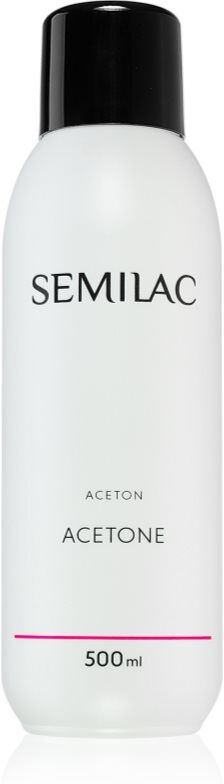
Semilac Liquids pure acetone for removing gel nails 500 mlSemilac Liquids, 500 ml, Nail Varnish Removers for Women, Nails with chipped nail polish never look pretty, let alone neat. Step in before the peeling starts. The Semilac Liquids nail polish remover helps you remove any nail polish from the surface of your nails quickly and effectively. It leaves them perfectly clean, free of any residue and ready for the next step. This allows you to change up your style as often as you please – you’ll be ready for a brand new at-home manicure in no time. Characteristics: also removes dirt and oily traces from the nails removes polish quickly and effectively How to use: Apply the nail polish remover to a cotton wool pad, place briefly on the nails, then remove the polish gently.6,50 £*Shipping: 3,99 £Secure redirect to the provider
-
Semilac Liquids pure acetone for removing gel nails 125 mlSemilac Liquids, 125 ml, Nail Varnish Removers for Women, Nails with chipped nail polish never look pretty, let alone neat. Step in before the peeling starts. The Semilac Liquids nail polish remover helps you remove any nail polish from the surface of your nails quickly and effectively. It leaves them perfectly clean, free of any residue and ready for the next step. This allows you to change up your style as often as you please – you’ll be ready for a brand new at-home manicure in no time. Characteristics: also removes dirt and oily traces from the nails removes polish quickly and effectively How to use: Apply the nail polish remover to a cotton wool pad, place briefly on the nails, then remove the polish gently.4,60 £*Shipping: 3,99 £Secure redirect to the provider
-
Is braking a reflex?
Braking can be considered a reflex in certain situations. When a driver reacts to a sudden obstacle or hazard on the road by immediately pressing the brake pedal, it can be seen as a reflexive action. This is because the response is automatic and occurs without conscious thought. However, braking can also be a learned behavior, as drivers are trained to use their brakes in specific situations through practice and experience. Therefore, while braking can be a reflex in some cases, it can also be a learned and intentional action. **
-
What is the formula for braking acceleration and braking time in physics?
The formula for braking acceleration is given by \( a = \frac{v_f - v_i}{t} \), where \( a \) is the braking acceleration, \( v_f \) is the final velocity, \( v_i \) is the initial velocity, and \( t \) is the time taken to come to a stop. The formula for braking time can be calculated using the equation \( t = \frac{v_f - v_i}{a} \), where \( t \) is the braking time. These formulas are used to calculate the rate at which an object slows down when braking. **
-
What is the difference between a full braking and an emergency braking?
Full braking refers to applying the brakes with maximum force in a controlled manner to slow down or stop the vehicle. This can be done in response to normal traffic conditions or when approaching a stop sign or traffic light. On the other hand, emergency braking is a sudden and forceful application of the brakes in response to an unexpected hazard or danger, such as a pedestrian stepping into the road or a vehicle suddenly stopping in front. Emergency braking is typically done to avoid a collision and requires quick reflexes and a strong, immediate response from the driver. **
-
What is the difference between braking with a clutch and braking without?
Braking with a clutch involves pressing the clutch pedal while simultaneously applying the brakes, which disengages the engine from the transmission and allows the vehicle to coast to a stop. This method is often used in manual transmission vehicles to prevent stalling. On the other hand, braking without using the clutch means simply applying the brakes without disengaging the engine from the transmission, which can cause the vehicle to stall if the engine speed drops too low. In summary, the main difference is that braking with a clutch allows the vehicle to coast to a stop without stalling, while braking without the clutch can potentially lead to stalling if not done properly. **
* All prices are inclusive of VAT and, if applicable, plus shipping costs. The offer information is based on the details provided by the respective shop and is updated through automated processes. Real-time updates do not occur, so deviations can occur in individual cases. ** Note: Parts of this content were created by AI.